
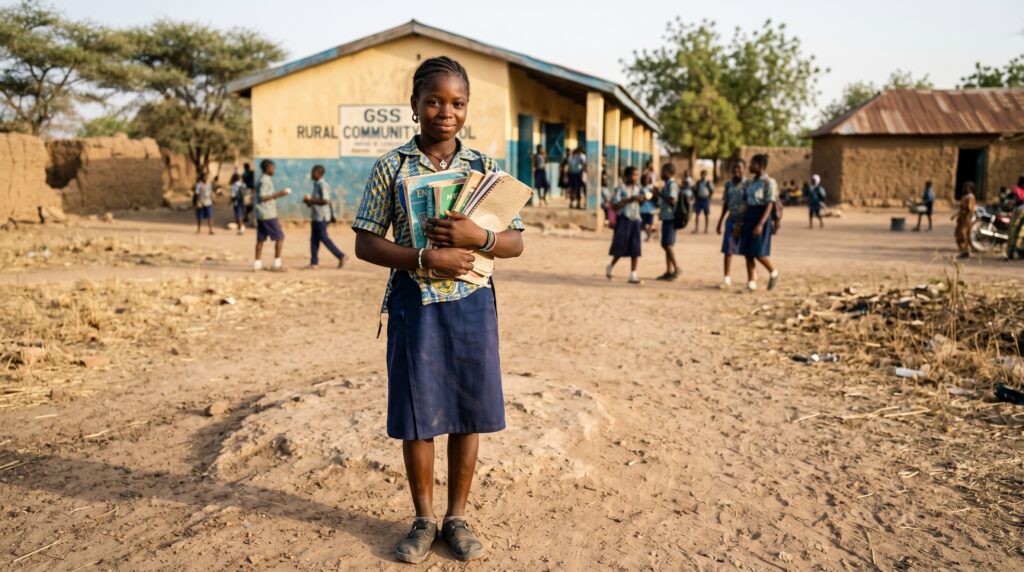
Nigeria’s Out-of-School Crisis
Nigeria continues to face one of the largest education gaps globally, with over 10 million children out of school, many of them adolescents concentrated in Northern Nigeria. This crisis is not just about access to classrooms; it reflects a deeper structural issue shaped by poverty, insecurity, gender norms, and weak educational infrastructure.
For many families, the cost of schooling, even when tuition is free, includes uniforms, books, and transportation, making education unaffordable. In rural communities, long distances to schools discourage attendance, particularly for girls. Cultural expectations, including early marriage and domestic responsibilities, further limit opportunities for adolescent girls to remain in school.
The implications of this crisis extend far beyond literacy. Adolescents who are out of school are significantly more vulnerable to exploitation, early pregnancy, and poor health outcomes. Research consistently shows that education is strongly linked to improved health behaviours, higher earning potential, and increased civic participation. Without it, young people are often locked into cycles of poverty that persist across generations.
Addressing this issue requires more than building schools. It demands a multi-layered approach that tackles economic barriers, engages communities, and creates supportive systems that keep adolescents in school. Scholarships, school supply programmes, and awareness campaigns must work together to shift both access and attitudes.
If Nigeria is to unlock the potential of its youth population, the education crisis must be treated as an urgent national priority. Every adolescent out of school represents not just a missed opportunity for the individual, but a loss for society as a whole.