
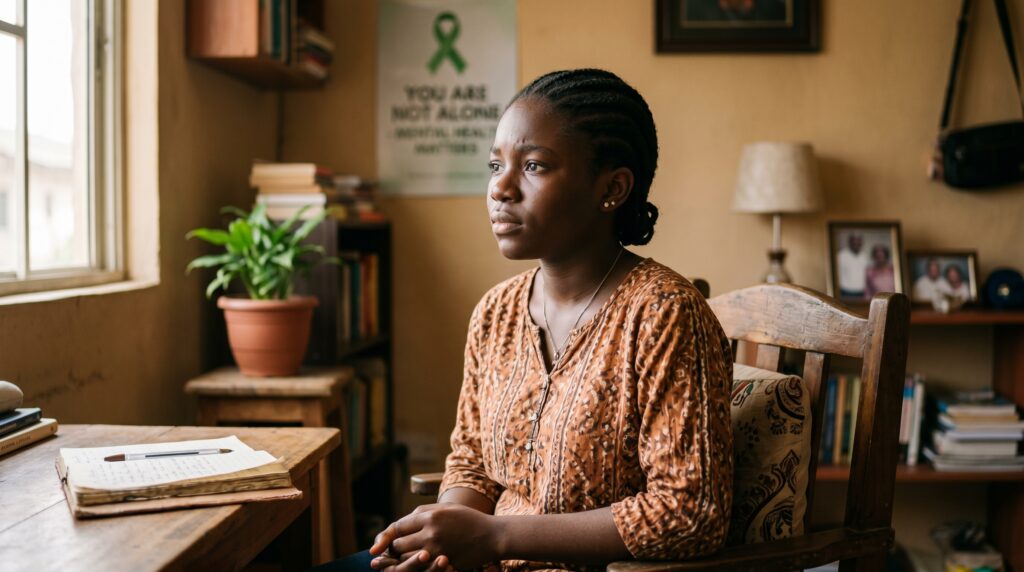
The Health Information Gap Among Nigerian Adolescents
Health remains one of the most overlooked yet critical aspects of adolescent development in Nigeria. Many teenagers lack access to accurate, age-appropriate information about their physical and mental wellbeing, leaving them vulnerable to preventable risks.
According to the World Health Organization, adolescents in low-resource settings often face significant barriers to accessing health services. These barriers include cost, distance, stigma, and a lack of youth-friendly healthcare environments. In Nigeria, these challenges are compounded by cultural norms that discourage open conversations about mental health and sexual and reproductive health.
As a result, many adolescents rely on misinformation or remain uninformed altogether. This gap contributes to high rates of early pregnancy, untreated mental health conditions, and poor health decision-making. The long-term consequences can affect education, economic stability, and overall quality of life.
The issue is not simply the absence of services, it is the lack of accessible, trusted, and adolescent-friendly systems. Young people need safe spaces where they can ask questions, receive accurate information, and access support without fear of judgment.
Addressing this crisis requires a comprehensive approach that combines education, community engagement, and improved access to healthcare resources. When adolescents are informed and supported, they are better equipped to make decisions that protect their health and future.
Health is not separate from development, it is central to it. Without healthy adolescents, there can be no sustainable progress.